Threads of Silk
- Timeline
- Feb – Jun 2024
- Team
- 5 (graphic designers, product designers, psychologists)
- My focus
- UX research, IA, interaction design, UI design, prototyping, user testing
- Disciplines
- UX/UI, Research, Multi-touchpoint experience
- Tools
- Figma, Adobe Suite
Overview
I designed a three-touchpoint storytelling system for the Silk Museum in Como, turning donated artefacts into a visible network of community stories — in the museum, online, and for staff.
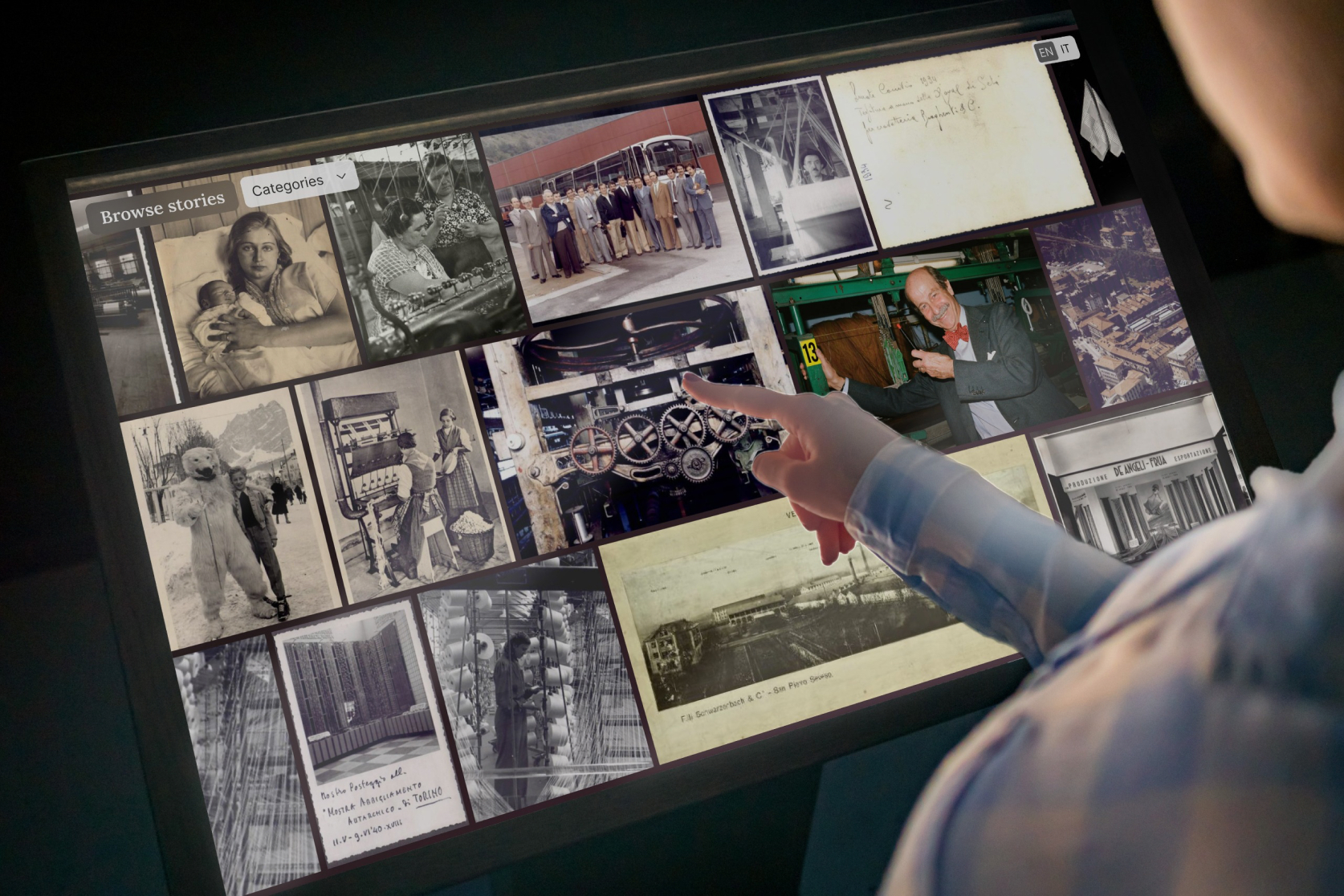
Starting point
Bring the community’s stories to the surface and connect them to the collection.
The Silk Museum preserves Como’s silk heritage, but the people behind it stay invisible. Over three visits we saw that the narrative centres on a single figure, Giannino Brenna, while more than 90% of the objects on display were donated by local people.
I took part in the on-site research and in defining three personas — Curious Visitors, the Silk Community and Museum Staff — which guided every design choice.
- Phase 1
Research
3 on-site visits at the Silk Museum.
- Phase 2
Personas
3 user groups with different needs.
- Phase 3
Card sorting
24 stories, 5 participants, 8 macro-groups.
- Phase 4
Architecture
IA and wireframes for 3 touchpoints.
- Phase 5
Testing
A low-fidelity prototype with target users.
Concept
How might we make the community’s heritage visible?
By collecting, preserving and sharing the stories behind the objects, for three different audiences:
- 01
Curious Visitors
tourists drawn to silk culture, often looking for a personal connection or a touch of nostalgia.
- 02
Silk Community
locals with family ties to Como’s silk history, who value legacy and belonging.
- 03
Museum Staff
curators dedicated to preserving the museum’s heritage.
Outcome
A connected system that turns individual memories into a navigable network of narratives.
- 01
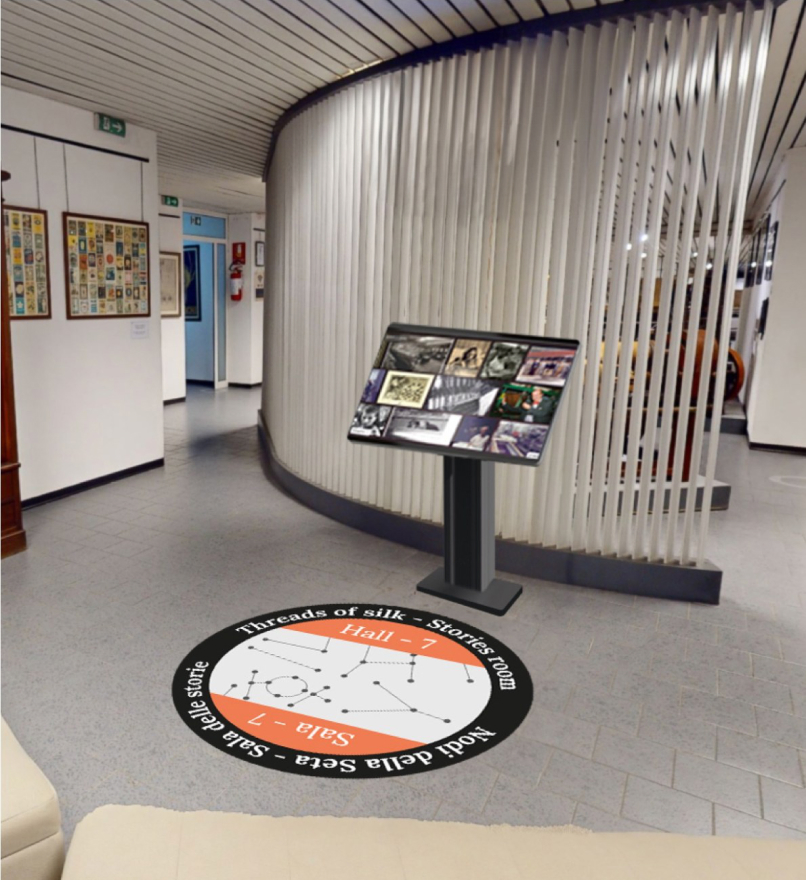
Explore (in-museum, 32”)
visitors browse stories, follow links between people and objects, and find those objects in the museum.
- 02
Submit (website)
locals and visitors share stories and media beyond the museum walls.
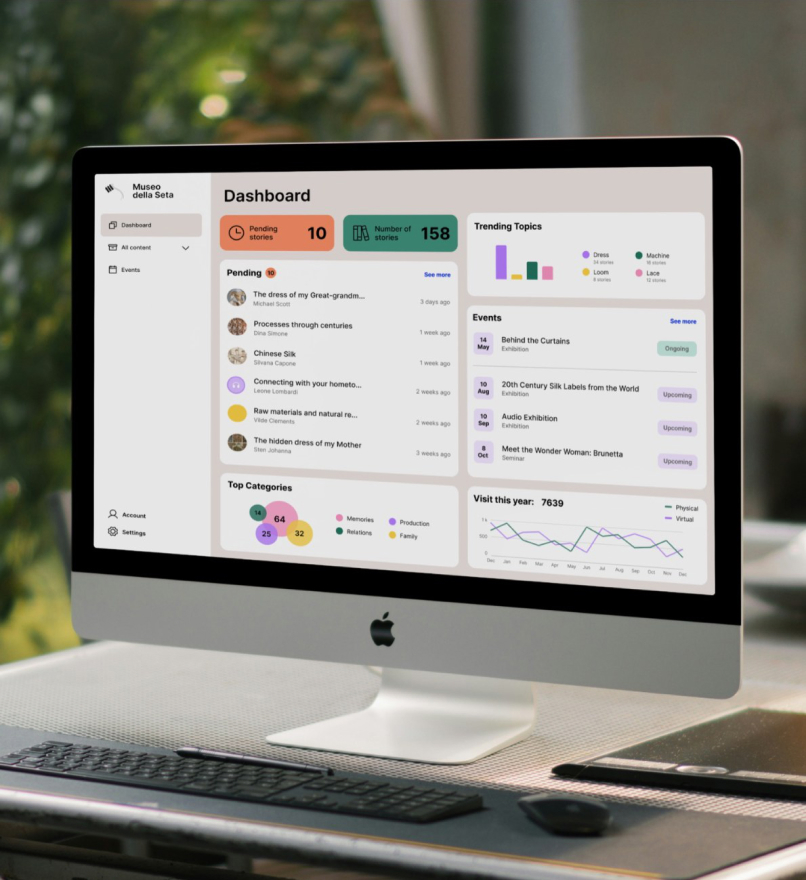
- 03
Organize (staff tool)
staff review, tag and approve submissions, and create events around stories.
I worked on the information architecture of the three touchpoints, designed wireframes and navigation models, and then the final interface.
How it works
One loop across three touchpoints.
A story travels from the website to the museum screen, and each one leads to the author’s profile and their other stories.
- Step 1
Submit · website
Locals and visitors share a story with related media.
- Step 2
Organize · staff tool
Staff review, tag and approve it, and link it to museum objects.
- Step 3
Explore · museum screen
Visitors find it on the 32” screen, connected to people and objects.
Key design decisions
Stories are a network to explore, not isolated posts.
- 01
Taxonomy before UI
a card sorting with 5 participants on 24 stories produced about 40 tags, which an affinity map reduced to 8 macro-groups.
- 02
Connection-first exploration
every story links to related stories, objects and authors, to encourage serendipity.
- 03
Designed for a shared 32” screen
quick, standing use and groups, with progressive disclosure to handle long content.
We tested a low-fidelity prototype with people close to the three personas to check functionality and navigation before the final design.
Why it matters
Giving a voice to the hidden heroes of Como’s silk industry.
By letting people share their own stories, the platform brings to light the people and connections behind the collection, keeps silk culture alive from one generation to the next and strengthens the bonds within the silk community.
Methods
- On-site observation
- Personas + scenarios
- Card sorting
- Affinity mapping
- Wireframing
- Prototype testing