MEDIANT
- Timeline
- Feb – Jun 2024
- Team
- 5 people (graphic designers, architect, IT specialist)
- My focus
- ideation, AI research, user research, UX/UI design, testing
- Disciplines
- AI platform design, UX/UI, Service design, Healthcare
- Tools
- Figma, Adobe Suite
Overview
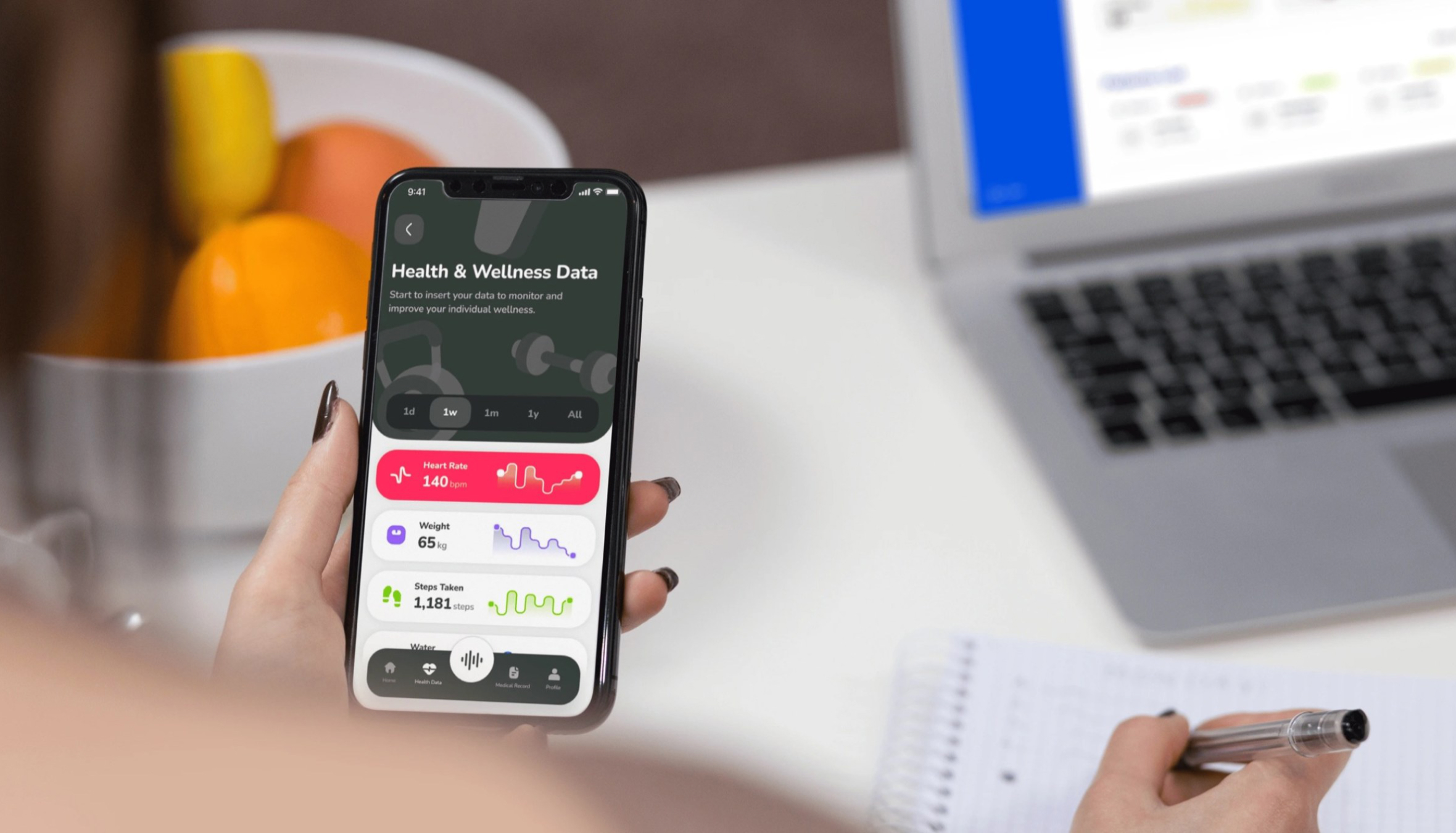
I designed an AI-powered platform that reduces documentation burden during medical visits, helping doctors stay focused on patient communication while keeping records accurate and complete.
Process
- Phase 1
Research
Desk research, brainwriting and interviews with doctors.
- Phase 2
How Might We
Five scenarios, one chosen to start from.
- Phase 3
Ideation
The needs of patient and doctor during a visit.
- Phase 4
Concept
Service structure, data sources and AI core.
- Phase 5
Design
Information architecture, wireframes and an atomic design system.
Starting point
Keep the visit patient-centered, without sacrificing clinical accuracy.
Research on the Italian healthcare system revealed a recurring issue: doctors’ workflows are slowed down by time-consuming documentation, so visit time shifts from listening and dialogue to note-taking.
Desk research, brainwriting and in-depth interviews with doctors led to one question: how might we develop an AI-driven ecosystem that enables a deeper focus on patient and doctor communication during visits?
Outcome
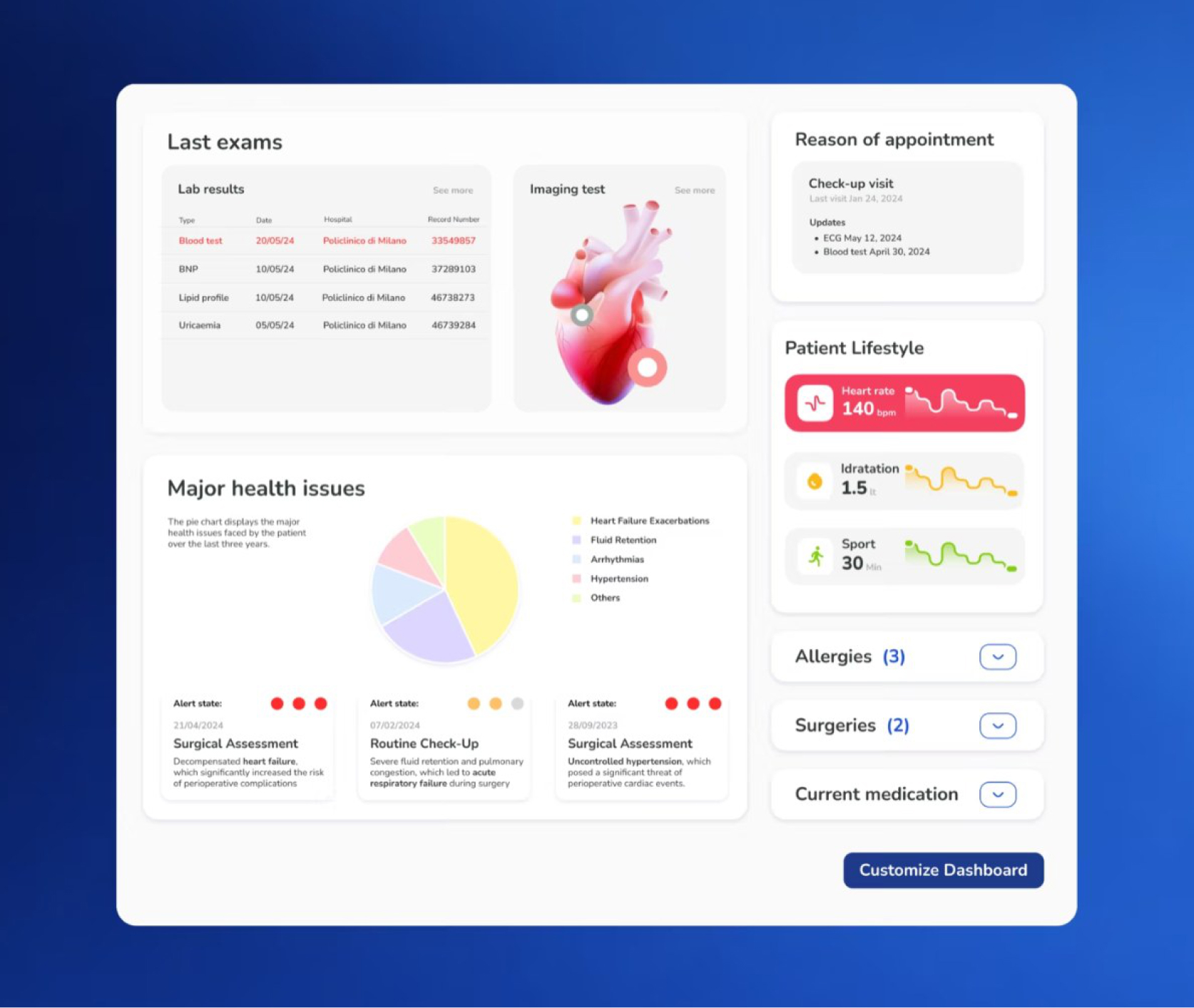
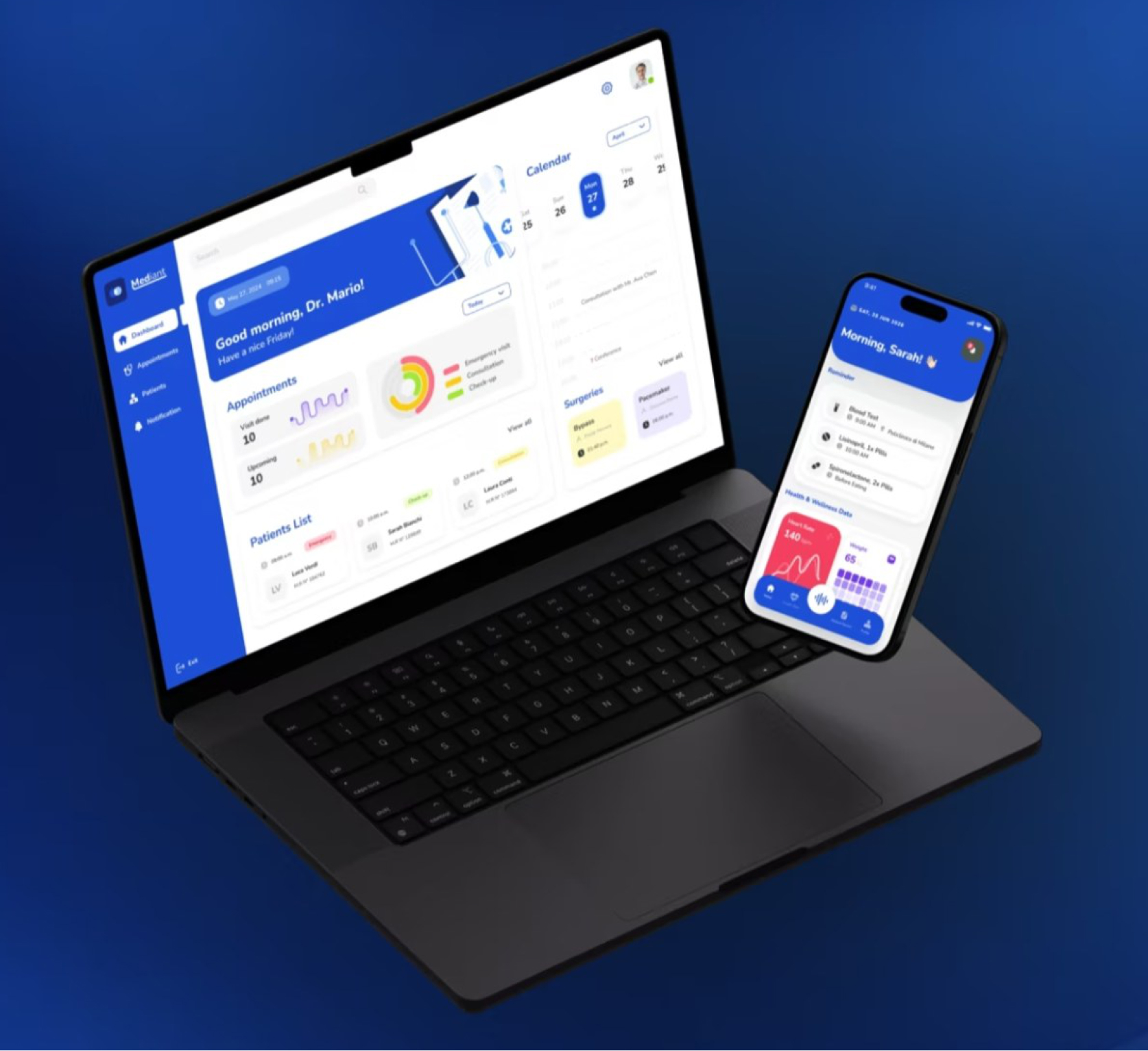
A service concept and interface system made of two coordinated touchpoints.
- 01
Doctor platform (web)
a dashboard for appointments, patients and medical histories, with voice notes and AI-generated visit summaries.
- 02
Patient app (mobile)
secure access to health information, appointment booking, health data monitoring and a voice assistant.
The two sides exchange information continuously: the doctor easily finds patient information, which the patient keeps updated through the app.
- Step 1
Patient · app
Keeps health data up to date and books visits.
- Step 2
Mediant · AI core
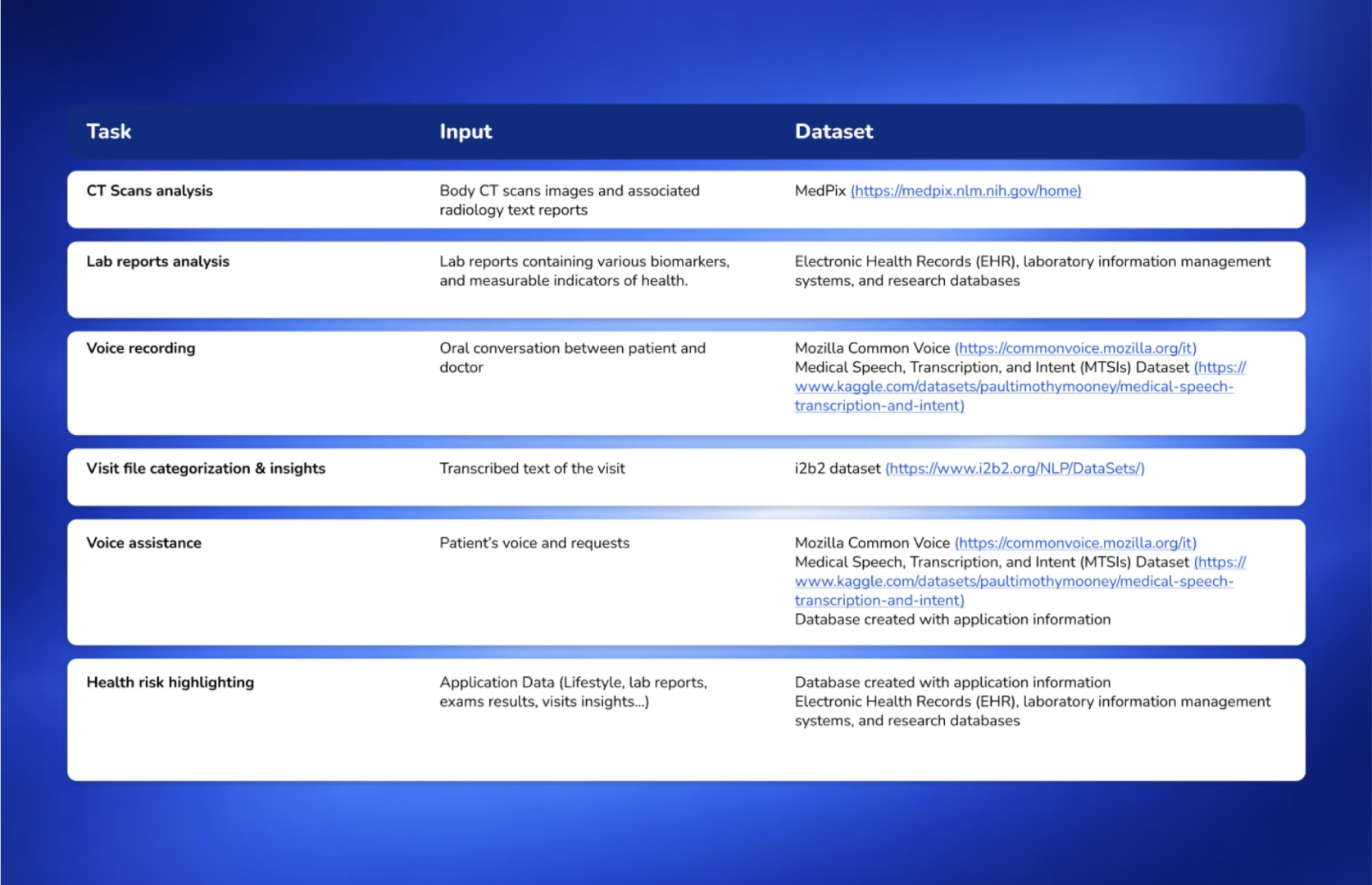
Organizes data sources and turns voice notes into documentation.
- Step 3
Doctor · web platform
Finds patient information and AI-generated visit summaries.
Key design decisions
The patient-centered visit as the core KPI.
- 01
Real-time capture
voice notes and AI-generated documentation reduce manual typing.
- 02
One shared logic
doctor and patient experiences built on the same data structure.
- 03
Data sources as a constraint
each feature designed around the availability and reliability of its data.
- 04
Atomic design system
consistent components across a complex platform.
Methods
- Desk research
- Brainwriting
- Benchmarking + case studies
- In-depth interviews with doctors
- How Might We framing
- Information architecture
- Wireframing + prototyping
- UX testing